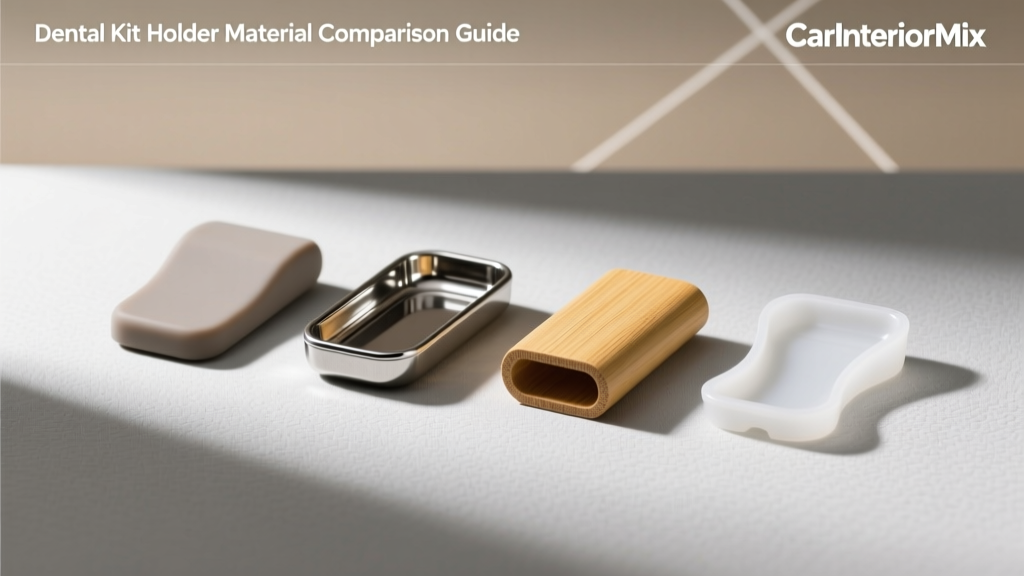
Dental Kit Holder Material Comparison Guide - CarInteriorMix
If you?ve ever eaten a messy snack on a road trip, finished a coffee on the commute, or picked something stubborn out of your teeth at a stoplight, you already understand why a dental kit belongs in your car. Floss picks, travel toothbrushes, interdental brushes, aligner cases, and small tooth-care items can make a huge difference in how ?fresh? you feel between destinations?especially for drivers who spend long hours behind the wheel.
The catch: tossing dental items loose into a center console turns into a hygiene issue fast. Heat, dust, spills, and random interior debris aren?t kind to toothbrush heads or floss packets. A purpose-built dental kit holder solves that, but the material you choose decides how well it survives daily use: sun-baked dashboards, winter condensation, accidental soda spills, and the occasional drop under a seat rail.
This guide breaks down the most common dental kit holder materials for car interiors?plastic, silicone, fabric, leather, metal, and hybrids?so you can pick the right one for your vehicle, your routine, and your climate. You?ll also get practical install tips, real-world scenarios, mistakes to avoid, and a quick FAQ.
What Is a Car Dental Kit Holder (and Why Material Matters)?
A dental kit holder is a small organizer designed to keep oral hygiene items clean, accessible, and contained inside your vehicle. Some are hard cases; others are pouches, cupholder canisters, visor organizers, or console caddies with compartments.
Material matters because your car interior is a harsh environment:
- Heat: Parked cars routinely exceed 120�F/49�C in sun.
- UV exposure: Sunlight degrades cheap plastics and fabrics.
- Moisture: Wet toothbrush heads + sealed cases can grow odor and bacteria.
- Vibration and movement: Cheap zippers, snaps, and hinges fail early.
- Spills and grime: Console areas collect dust, hand oils, and sticky residue.
Choosing the right material helps with hygiene, durability, odor control, and how ?OEM? the holder looks next to your car?s trim.
Quick Comparison: Dental Kit Holder Materials at a Glance
| Material | Best For | Pros | Cons | Typical Price |
|---|---|---|---|---|
| Hard Plastic (ABS/PP) | Everyday console storage | Easy to wipe, affordable, rigid protection | Can warp or crack if cheap; can trap moisture | $8?$25 |
| Silicone | Wet items, quick cleaning | Water-resistant, grippy, quiet (no rattles) | Attracts lint; can hold odors if not washed | $10?$30 |
| Fabric (Nylon/Polyester) | Lightweight travel pouch | Flexible, lots of pockets, easy to pack | Stains and absorbs odors; needs washing | $8?$35 |
| Leather / PU Leather | Premium look matching interiors | Stylish, soft-touch, less ?medical? look | Moisture risk; PU can peel in heat | $15?$60 |
| Metal (Aluminum/Stainless) | Maximum protection | Durable, premium feel, easy to disinfect | Can rattle, gets hot/cold, may dent | $20?$70 |
| Hybrid (Plastic + Silicone seals) | Balanced daily use | Good hygiene + structure | More parts to fail; higher cost | $18?$50 |
Material-by-Material Breakdown (What to Choose and Why)
1) Hard Plastic (ABS, Polypropylene, Polycarbonate)
Best for: A simple, clean case that lives in the center console, door pocket, or glove box.
Why car owners like it: Plastic cases are easy to wipe and don?t absorb spills. A rigid shell also protects toothbrush heads and keeps floss packets from getting crushed.
Real-world example: If you keep a travel toothbrush and mini toothpaste in your console, a hard plastic clamshell prevents the toothpaste cap from squeezing open when you toss in your phone charger.
What to look for:
- ABS or PP over brittle ?mystery plastic? (less cracking in cold weather)
- Rounded edges so it doesn?t snag console lining
- Vent slots if you store a damp brush (reduces funk)
- Hinges and latches that feel tight but not flimsy
Watch-outs: Low-quality plastic can warp if left on the dash in summer. Clear plastic also yellows from UV over time.
2) Silicone
Best for: Drivers who regularly store wet items (toothbrush, aligner case) and want a holder that?s easy to rinse.
Why it works in car interiors: Silicone is water-resistant, naturally grippy (so it slides less), and it dampens rattles. If your dental kit holder sits in a cupholder, silicone is one of the quietest materials on rough roads.
Real-world example: A silicone cupholder caddy can hold floss picks upright and still keep them from clacking against hard plastic trim in a sporty suspension setup.
What to look for:
- Food-grade or medical-grade silicone (less smell out of the box)
- Smooth interior surfaces for easy cleaning
- Drain/vent design if you store a wet brush
Watch-outs: Silicone can attract lint and dust. It can also hold odors if you never soap-wash it?especially if you store minty items mixed with coffee-stained stirrers or snack wrappers in the same console area.
3) Fabric (Nylon, Polyester, Canvas)
Best for: A portable dental kit pouch you move between your car, gym bag, and office.
Why it?s popular: Fabric organizers often offer more pockets and better space efficiency than hard cases. They?re also easy to wedge into tight spots and can be lighter than plastic or metal.
Real-world example: A zippered nylon pouch with two compartments lets you separate ?clean? items (floss, picks) from ?used? items (a toothbrush you just rinsed at work) until you get home.
What to look for:
- Ripstop nylon for durability
- Water-resistant lining inside (PU-coated interior helps)
- Quality zipper (YKK-style zippers tend to last)
- Removable inner sleeve for washing
Watch-outs: Fabric absorbs smells and stains. If you store anything damp, add a vented toothbrush cap or let the brush air dry before zipping the pouch.
4) Leather and PU Leather (Faux Leather)
Best for: A premium-looking dental kit holder that matches a luxury interior and doesn?t scream ?bathroom accessory.?
Why it fits car aesthetics: Leather and leather-like finishes blend with seats, steering wheel wraps, and stitched console trim. For enthusiasts who keep their interior dialed in, this matters.
Real-world example: A compact PU leather organizer with subtle stitching can live in the door pocket without looking like an afterthought next to OEM materials.
What to look for:
- Genuine leather: better aging, but requires conditioning
- PU leather: choose thicker, higher-quality PU with reinforced seams
- Wipeable interior liner: prevents moisture soaking into stitching
Watch-outs: PU leather can peel or crack in high heat, especially if it?s pressed against hot plastic trim. Leather can absorb moisture and develop odor if you store wet items.
5) Metal (Aluminum or Stainless Steel)
Best for: Maximum protection, easy disinfection, and a ?gear-like? premium feel.
Why metal makes sense: Metal cases don?t absorb odors and can be sanitized thoroughly. They?re also resistant to crushing?useful if your dental kit shares space with tools, tire gauge, or a flashlight.
Real-world example: If you keep an aligner case, floss, and a small interdental brush in your glove box with manuals and a tire inflator, a slim aluminum case keeps everything from being smashed.
What to look for:
- Rounded corners to protect interior surfaces
- Gasket or seal if you want dust protection
- Soft inner lining to prevent rattling and scratches
Watch-outs: Metal gets hot in summer and cold in winter. It can also rattle if not padded. Avoid placing bare metal cases in cupholders without a sleeve.
6) Hybrids (Plastic Shell + Silicone Seal, Fabric + Liner)
Best for: Drivers who want a balance of structure, hygiene, and interior-friendly behavior.
Many of the best car interior organizers use hybrid designs: a rigid plastic shell for protection with a silicone seal for spill resistance, or a fabric exterior for aesthetics with a wipe-clean liner inside.
Watch-outs: More parts mean more failure points (hinges, seals, snaps). Buy from brands that show close-up photos of seams and closures.
How to Choose the Right Material for Your Car and Routine
Step-by-Step Selection Checklist
- Decide where it will live: cupholder, center console, glove box, door pocket, seatback pocket, or visor.
- List what you?ll store: dry items only (floss picks, gum) vs. wet items (toothbrush, aligner case).
- Match material to climate:
- Hot/sunny regions: avoid cheap PU and thin plastic left on the dash.
- Cold regions: avoid brittle plastics that crack; favor ABS/PP, silicone, or fabric.
- Pick a cleaning style you?ll actually do: wipe-down (plastic/leather/metal) vs. wash (fabric/silicone).
- Check noise and movement: if your car is sporty or you drive rough roads, avoid rattly metal unless padded.
- Confirm size and access: measure the console or cupholder diameter so it doesn?t interfere with shifting or controls.
Practical Tip: Ventilation Beats ?Airtight? for Toothbrushes
People often assume a sealed case is more hygienic. For toothbrush storage in cars, a vented design is usually better because it reduces trapped moisture. If you need dust protection, look for a case with small vents rather than a completely airtight box.
Product Style Recommendations (Based on Material)
Rather than pushing one specific brand, here are proven holder styles that work well in real cars:
Best Everyday Console Setup: Vented Hard Plastic Case
- Ideal materials: ABS or PP
- Best for: floss picks, mini toothpaste, travel brush
- Look for: vent slots, easy-open latch, wipe-clean interior
Best for Wet Brushes and Quiet Rides: Silicone Cupholder Caddy
- Ideal materials: silicone
- Best for: upright storage, quick rinsing, minimal rattles
- Look for: removable insert, smooth surfaces, stability ribs
Best Premium Look: Leather/PU Organizer with Wipeable Liner
- Ideal materials: leather or quality PU + inner lining
- Best for: luxury interiors, door pocket storage
- Look for: reinforced stitching, heat-resistant finish, structured shape
Best for Glove Box Protection: Metal Case with Soft Liner
- Ideal materials: aluminum/stainless + felt/silicone lining
- Best for: aligners, interdental brushes, spare floss
- Look for: rounded edges, secure closure, no sharp corners
Installation and Setup: Keep It Clean and Actually Usable
Step-by-Step: Set Up a Car Dental Kit Holder the Right Way
- Pick a ?clean zone? location: center console upper tray or glove box is usually cleaner than door pockets.
- Wipe the area first: use an interior-safe cleaner on the storage spot and let it dry.
- Use separation: keep dental items away from coins, pens, and old receipts. A small divider or inner pouch helps.
- Add a moisture plan:
- If storing a toothbrush: use a vented cap and let it air dry before closing the case when possible.
- If storing aligners: include a small microfiber cloth or tissue pack.
- Stabilize it: if it slides, add a thin silicone pad or hook-and-loop strip (console-safe) to stop movement.
- Build a refill routine: restock floss picks and mini toothpaste monthly so it doesn?t become a clutter box.
Common Mistakes to Avoid
- Storing wet toothbrushes in airtight cases: this is a fast track to odors and questionable hygiene.
- Choosing cheap PU leather for hot climates: peeling and sticky surfaces happen sooner than most people expect.
- Letting metal cases rattle against trim: it sounds annoying and can leave marks?use a liner or sleeve.
- Overstuffing fabric pouches: stressed zippers fail, and bulky pouches become console clutter.
- Mixing ?clean? and ?used? items: if you brush on the go, keep a separate mini bag for used items until you can clean them.
- Ignoring heat exposure: avoid leaving toothpaste or certain oral care products on the dash; store them in shaded compartments.
FAQ: Dental Kit Holders for Car Interiors
What?s the most hygienic material for a car dental kit holder?
For easy sanitation, hard plastic and metal are simplest to wipe and disinfect. If you store wet items, a vented plastic case or silicone holder that you can wash regularly tends to work best in real-world car use.
Will a dental kit holder melt or warp in a hot car?
Quality ABS/PP plastic and silicone usually hold up well, but thin, cheap plastics can warp if left in direct sun. PU leather can degrade faster in extreme heat. If you park outside often, keep the holder in the center console or glove box rather than on the dash.
Is silicone better than plastic for cupholders?
Often, yes. Silicone is grippier and quieter, so it reduces rattles and slipping. Plastic can work fine too, but it?s more likely to clack against the cupholder walls unless it has rubber feet or a soft outer ring.
How do I stop my holder from sliding around in the console?
Use a thin non-slip silicone pad underneath, or apply a small strip of console-safe hook-and-loop to the base. Also consider a holder shape that matches your console tray dimensions rather than a one-size-fits-all pouch.
Can I store an electric toothbrush head in the car?
You can, but keep it in a rigid, vented case to protect the bristles and reduce moisture buildup. Avoid leaving it wet and sealed for days; let it dry when possible, and clean the case regularly.
What?s the best option for families or multiple drivers?
A compartmentalized fabric organizer with wipeable lining or a multi-slot silicone caddy works well. Label sections (or use color-coded toothbrush caps) so everyone?s items stay separated and hygienic.
Wrap-Up: The Best Material Choice Depends on Your Habits
If you want simple, durable, and easy-to-clean, go with a vented hard plastic case. If you prioritize quiet storage and quick washing?especially for wet items?silicone is a strong pick. For a premium interior-matching look, choose leather (or high-quality PU) with a wipeable liner. And if you need maximum protection in a glove box setup, a lined metal case is hard to beat.
Next steps:
- Measure your intended storage spot (cupholder, console tray, glove box).
- Decide whether you?ll store wet items?then prioritize ventilation.
- Pick a material that matches your climate and how often you?ll clean it.
- Set a monthly restock reminder so your dental kit stays ready, not cluttered.
For more practical car interior organization tips and material guides, explore the latest articles on carinteriormix.com.